Paraguay Healthcare Access for Residents: 2026 Guide
Paraguay's healthcare access for residents is defined by a dual public and private system where your insurance status, location, and residency type determine the quality and speed of care you receive. Only 31% of Paraguay's population has health insurance, meaning the remaining 69% depends entirely on public services. That gap shapes every aspect of healthcare in the country, from wait times in Asunción clinics to emergency response in rural departments. Understanding the system before you need it is the single most important step you can take as a resident.
1. What are the main healthcare services available to residents in Paraguay?
Paraguay's healthcare system runs on two parallel tracks: a public sector funded by the state and a private sector funded by insurance or out-of-pocket payments. Both tracks offer primary consultations, emergency care, hospitalization, and specialized treatments, but the experience differs significantly between them.
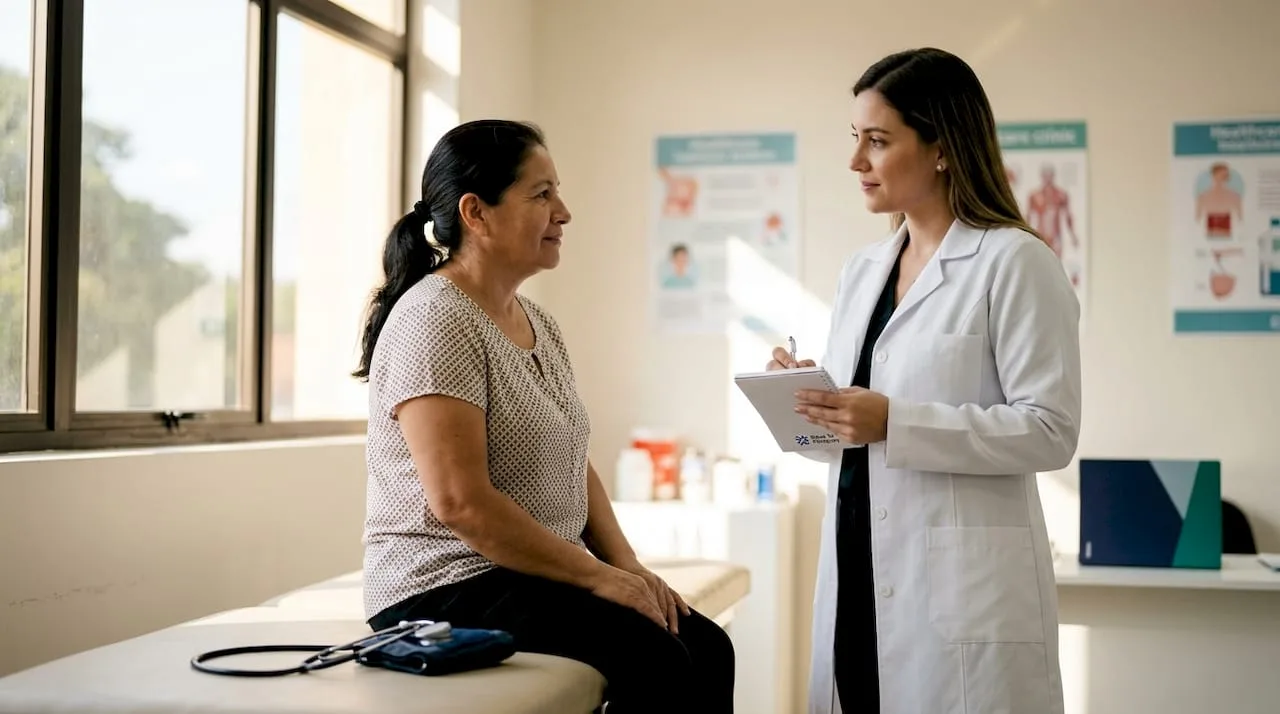 Patient consulting doctor in Paraguay clinic
The public system, managed by the Ministry of Public Health and Social Welfare (MSPBS), provides free or low-cost services to all citizens and legal residents. The trade-off is real. Facilities in smaller cities and rural areas often lack modern equipment, and wait times for specialist appointments can stretch for weeks.
The private sector delivers faster access and higher-quality care. Private clinics in Asunción offer internationally accredited facilities and specialists who often trained abroad. Residents with private insurance or the financial means to pay directly use this sector for everything from routine checkups to complex surgeries.
- Primary care: Available at public health posts (puestos de salud) and private clinics nationwide
- Emergency care: Public hospitals provide 24-hour emergency services; private hospitals offer faster triage
- Specialist consultations: Cardiology, oncology, and orthopedics are available in Asunción; rural access is limited
- Hospitalization: Both sectors offer inpatient care, with private hospitals providing better room conditions and staffing ratios
- Diagnostic services: Labs and imaging centers are concentrated in urban areas; rural residents often travel to access them
Pro Tip: If you live outside Asunción, identify the nearest private clinic with imaging equipment before an emergency arises. Knowing your options in advance saves critical time.
2. How does health insurance coverage affect access to healthcare for Paraguay residents?
Health insurance is the clearest dividing line in Paraguay's medical system. Urban residents have 36.3% coverage compared to just 17.8% in rural areas. That gap means rural residents face both lower coverage rates and fewer facilities to use even when covered.
Residents with insurance, whether through the Instituto de Previsión Social (IPS, Paraguay's public social security system) or a private insurer, gain two concrete advantages: financial protection against large medical bills and priority access to a wider network of providers. Without insurance, a single hospitalization can cost more than several months of average income.
Prepaid medical plans, known locally as medicina prepaga, are growing in popularity. These plans attract residents who want faster specialist access and better facilities without relying on the public system. They typically cover consultations, hospitalization, and some specialist care for a fixed monthly premium.
| Coverage type | Who qualifies | Key benefit | Typical cost level |
|---|
| IPS (public social security) | Formal employees contributing payroll | Free hospital care and medications | Funded by 25.5% salary contribution |
| Private health insurance | Any resident who can pay premiums | Wide provider network, faster access | Moderate to high monthly premium |
| Prepaid medical plan | Any resident | Fixed monthly cost, specialist access | Low to moderate monthly premium |
| No insurance (public only) | All legal residents | Free basic care | No premium, but limited resources |
Pro Tip: Compare prepaid medical plans from at least three providers before signing. Monthly premiums, specialist networks, and coverage caps vary widely, and the cheapest plan often excludes the specialists you are most likely to need.
3. What challenges and disparities impact healthcare accessibility in Paraguay?
The healthcare system remains structurally unequal, with residency status and geographic location driving access disparities more than any other factor. Residents in Asunción and Ciudad del Este have access to well-equipped hospitals and a competitive private sector. Residents in departments like San Pedro or Concepción face a very different reality.
Paraguay has 11.1 doctors and 17.9 nurses per 10,000 inhabitants nationally. Those numbers drop further in rural zones, where recruiting and retaining medical professionals is a persistent challenge. The result is that emergency care in remote areas often means a long transfer to the nearest city hospital.
Language creates a separate barrier for non-Spanish speakers. Few medical professionals speak fluent English, particularly in public facilities and rural clinics. Miscommunication during a medical consultation is not just frustrating. It can lead to incorrect diagnoses or missed treatment instructions.
- Urban-rural gap: Urban residents consult medical services at higher rates than rural residents, reflecting both availability and awareness
- Professional shortages: Specialist shortages are most acute in rural departments, where general practitioners handle cases that would require referrals in cities
- Language barriers: English-speaking residents should prepare basic medical Spanish vocabulary before needing care
- Aging population: Paraguay's demographic shift toward an older population increases demand for chronic disease management, cardiology, and geriatric care
- Infrastructure gaps: Diagnostic equipment such as MRI machines and advanced labs is concentrated in Asunción
Paraguay's healthcare gap is not primarily a funding problem. It is a distribution problem. Resources, professionals, and equipment cluster in cities while rural departments operate with a fraction of what urban hospitals take for granted. Residents who understand this distribution reality plan better and get better care.
4. How can residents optimize their healthcare access in Paraguay?
Proactive planning separates residents who navigate Paraguay's medical system confidently from those who face avoidable delays and costs. The steps below are practical and apply regardless of whether you are newly arrived or have lived here for years.
- Secure insurance before you need it. Apply for IPS enrollment if you are formally employed, or purchase a private or prepaid plan as soon as you establish residency. Waiting until you are sick removes your best options.
- Learn medical Spanish. You do not need fluency. A working vocabulary covering symptoms, medications, allergies, and chronic conditions is enough to communicate clearly in most consultations.
- Choose private clinics for specialist care. For non-emergency specialist appointments, private clinics in Asunción consistently offer shorter wait times and more advanced equipment than public hospitals.
- Register with a primary care provider. Establish a relationship with a general practitioner before an emergency. That doctor becomes your first point of contact and your referral gateway to specialists.
- Keep organized medical records. Maintain a physical and digital file with your blood type, vaccination history, current medications, known allergies, and any chronic conditions. Paraguayan hospitals do not always share records between facilities.
- Plan for emergencies in advance. Know the address and phone number of the nearest private emergency room. Save the national emergency number (911) and the IPS emergency line if you are enrolled.
- Use top-rated hospitals in Asunción for complex procedures. Facilities like Hospital Privado Francés and Centro Médico La Costa are well-regarded among residents and expatriates for surgical and specialist care.
Pro Tip: Ask your insurer for a printed provider directory and keep it accessible offline. App-based directories are useful, but they fail exactly when you need them most, during emergencies with poor connectivity.
5. How does residency status influence healthcare access and benefits in Paraguay?
Your legal residency status directly determines which parts of Paraguay's healthcare system you can access and on what terms. This is not a minor administrative detail. It affects whether you pay for care, how quickly you receive it, and which facilities are available to you.
- Permanent residents can register for IPS, Paraguay's public social security system. Contributing 25.5% of salary to social security grants access to free treatment in IPS hospitals and clinics, including specialist care and hospitalization.
- Temporary residents are not automatically enrolled in IPS. They can access public MSPBS facilities for basic care but typically need private insurance or prepaid plans for reliable specialist access.
- Undocumented or irregular residents can access emergency public care but face barriers to routine services and cannot enroll in IPS.
- Formally employed residents of any status whose employers contribute to IPS gain coverage through that contribution, regardless of their specific residency category.
Need personalized help?
Get expert guidance for your Paraguay relocation journey. Our team is here to help you with residency, business setup, real estate, and banking solutions.
The administrative process for IPS registration requires your cédula (Paraguayan national ID), proof of employment, and employer registration with the social security system. The residency process that leads to permanent status typically takes 90 days when properly documented. Completing that process unlocks IPS enrollment and the full range of public healthcare benefits.
Key takeaways
Paraguay's healthcare access for residents is determined primarily by insurance status, residency type, and geographic location, making proactive planning the most effective tool available to you.
| Point | Details |
|---|
| Insurance coverage is low | Only 31% of Paraguay's population has health insurance; 69% rely on the public system alone. |
| Urban-rural gap is significant | Urban coverage reaches 36.3% while rural coverage sits at just 17.8%, affecting service availability. |
| Residency status unlocks IPS | Permanent residents contributing 25.5% of salary to social security access free public hospital care. |
| Private care is faster and better equipped | Private clinics in Asunción offer specialist access and advanced facilities not available in rural public hospitals. |
| Language preparation matters | Few public-sector providers speak English; learning basic medical Spanish protects your care quality. |
What I have learned navigating Paraguay's healthcare system
I have spent enough time working with residents and expatriates in Paraguay to say this clearly: the people who struggle most with healthcare here are the ones who assumed the system would work like it does back home.
The public system is genuinely free and genuinely limited. I have seen residents wait three weeks for a specialist referral through the public system and get the same appointment in two days through a private clinic for a cost that, by American standards, feels almost absurdly low. That price gap is real and worth using.
The urban-rural divide surprised me more than anything else. Asunción has private hospitals that would not embarrass a mid-sized American city. Drive two hours north and the picture changes completely. If you are settling outside the capital, private insurance is not optional. It is the difference between adequate care and a four-hour ambulance ride.
On language: do not wait until you are sick to learn medical Spanish. I have watched residents struggle to describe their symptoms through a phone translation app while a nurse waited impatiently. Thirty minutes of vocabulary preparation before you arrive saves real suffering later.
The residents who get the best outcomes here treat healthcare like a logistics problem. They know their insurer, their primary doctor, and their nearest private emergency room before they ever need any of them. That preparation costs almost nothing and pays off every time.
— Alejandro
Movetoparaguay: your starting point for healthcare-ready residency
Securing healthcare access in Paraguay starts with legal residency. Without the right status, you cannot enroll in IPS, access the full public system, or qualify for many private insurance plans.
Movetoparaguay helps U.S. expats and remote workers establish legal residency in Paraguay with a structured, step-by-step process that covers documentation, cédula registration, and social security enrollment. The team reviews your individual case and provides specific next steps, not generic checklists. Once your residency is in place, the path to IPS enrollment and private insurance registration becomes straightforward. Visit Movetoparaguay's services page to see how the process works and what your timeline looks like.
FAQ
What percentage of Paraguay residents have health insurance?
Only 31% of Paraguay's population has health insurance as of 2025, with urban coverage at 36.3% and rural coverage at just 17.8%.
Can expatriates access public healthcare in Paraguay?
Legal residents can access public MSPBS facilities for basic care, and permanent residents who contribute to IPS receive free hospital treatment. Temporary residents typically need private insurance for reliable specialist access.
How do I enroll in IPS as a resident in Paraguay?
IPS enrollment requires your cédula, proof of formal employment, and employer registration with the social security system. Permanent residency is the qualifying status that opens full IPS benefits.
Is private health insurance worth the cost in Paraguay?
Private insurance is worth the cost for residents who want specialist access, shorter wait times, and better-equipped facilities. Monthly premiums are significantly lower than comparable plans in the United States, making private coverage accessible for most expats.
What medical services are available in rural Paraguay?
Rural areas offer basic primary care through public health posts, but specialist services, advanced diagnostics, and emergency surgery typically require travel to the nearest city. Residents in rural departments should secure private insurance and identify the nearest urban hospital in advance.