Paraguay Residency vs Citizenship: What Movers Must Know
The difference between residency and citizenship in Paraguay is this: residency grants you the legal right to live and work in the country, while citizenship grants full legal nationality, including a Paraguayan passport and voting rights. These are two separate legal statuses with different requirements, timelines, and privileges. Most people planning a long-term move to Paraguay will start with residency and may eventually pursue citizenship. Understanding both paths upfront saves you from costly surprises later.
What is the difference between residency vs citizenship in Paraguay?
Residency and citizenship in Paraguay operate under distinct legal frameworks. Residency is an immigration status. Citizenship is a nationality status. Confusing the two leads to misaligned expectations about what rights you actually hold.
Paraguay offers two types of residency: temporary and permanent. Temporary residency is issued for a 2-year term and is renewable. It allows you to live and work legally in Paraguay but does not grant indefinite stay. Permanent residency removes the expiration date on your stay and gives you access to the national identity card, known as the cédula. Both statuses fall under Ley 6984/2022, which replaced the old rentista and pensionado visa categories with a unified administrative process and no fixed income threshold.
Citizenship, by contrast, is a constitutional status. It gives you the right to vote, hold most public offices, and carry a Paraguayan passport. You cannot apply for citizenship without first holding permanent residency for at least 3 years.
 Group discussing Paraguay citizenship rights at table
What are the types and requirements for Paraguay residency?
Paraguay's residency system is more accessible than most people expect. Under Ley 6984/2022, the government removed the fixed income requirement that previously applied to temporary residency applicants. You now need to demonstrate personal means of support rather than meet a specific monthly income figure. That change makes Paraguay one of the more accessible residency destinations in South America.
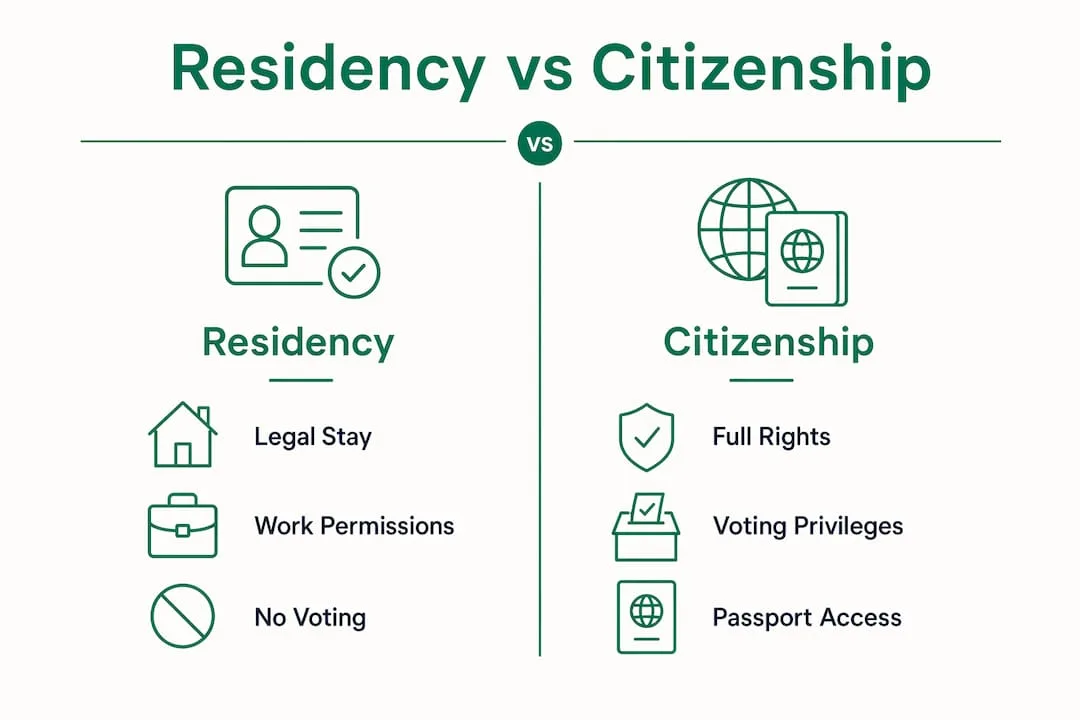 Infographic comparing Paraguay residency and citizenship
Temporary residency explained
Temporary residency is the entry point for most foreign nationals. It is valid for 2 years and renewable. During this period, you can work, open a bank account, and establish legal ties in Paraguay. You cannot vote or hold public office.
Required documents typically include:
- Valid passport (apostilled copy)
- Birth certificate (apostilled and translated into Spanish)
- Police clearance certificate from your home country (apostilled)
- Proof of financial means (bank statements or income documentation)
- Medical certificate
- Completed application forms
Pro Tip: Get your documents apostilled before you arrive in Paraguay. Doing this in your home country is faster and cheaper than arranging it from Asunción.
What is permanent residency in Paraguay?
Permanent residency grants indefinite legal stay. Permanent residency does not require a minimum daily presence in Paraguay, but you must enter the country at least once every 3 years to maintain your status. You receive a cédula, which functions as your national ID and opens access to banking, contracts, and government services.
The government fee for temporary residency runs approximately US$460–490. Total costs including translation, notarization, and professional assistance typically fall in the US$700–1,200 range. Permanent residency carries similar administrative costs.
Residency status is also distinct from tax residency. Paraguay taxes local income at a progressive rate under Ley 6380/2019, while foreign-source income is exempt. Holding a cédula does not automatically make you a tax resident. That determination depends on your physical presence and economic activity inside Paraguay.
How does citizenship in Paraguay work?
Paraguayan citizenship by naturalization follows a clear but demanding process. You cannot buy citizenship directly. Citizenship requires 3 years of permanent residency, a language integration test in either Spanish or Guaraní, and approval from the Supreme Court of Justice. There is no shortcut around the judicial review.
The full naturalization process, from application to approval, typically takes 12–24 months. That timeline sits on top of the 3-year permanent residency requirement. Plan for a total commitment of at least 4–5 years from your first residency application to receiving a Paraguayan passport.
The naturalization criteria include:
- Permanent residency for at least 3 years confirmed by immigration records
- Demonstrated physical presence in Paraguay during that period
- Lawful income or means of subsistence showing you are not dependent on public funds
- Clean criminal record with documentation from Paraguay and your home country
- Language proficiency in Spanish or Guaraní, verified through a formal test
- Supreme Court approval through a judicial ruling on your application
"Naturalized citizens in Paraguay are excluded from certain high offices, including President, Senate, Chamber of Deputies, and Supreme Court membership, per the Paraguayan Constitution."
That restriction matters if you have political ambitions. For the vast majority of expats, it has no practical impact on daily life.
Dual nationality and what it means for you
Paraguay accepts dual nationality with countries like Spain and Italy under bilateral treaties. For nationals of other countries, the outcome depends on reciprocity agreements or the renunciation requirements of your origin country. American citizens should check U.S. State Department guidance on dual nationality before applying, since U.S. law does not require renunciation but does have implications for consular protection.
How do residency and citizenship differ in daily life?
The practical gap between residency and citizenship shows up most clearly in four areas: political rights, travel documents, employment, and tax obligations.
| Area | Resident | Citizen |
|---|
| Voting rights | None | Full voting rights in all elections |
| Passport | Home country passport only | Paraguayan passport eligible |
| Public office | Not eligible | Eligible for most offices (some excluded for naturalized citizens) |
| Property ownership | Allowed | Allowed |
| Business formation | Allowed | Allowed |
| Tax on foreign income | Exempt under Ley 6380/2019 | Exempt under Ley 6380/2019 |
Both residents and citizens benefit from Paraguay's territorial tax system. Foreign-source income carries a 0% tax rate regardless of whether you hold residency or citizenship. That tax advantage does not change when you naturalize.
Pro Tip: If your primary goal is tax optimization and legal stay, permanent residency achieves that without requiring the 4–5 year path to citizenship. Citizenship becomes relevant when you want a second passport or plan to vote.
Employment and property rights are nearly identical for residents and citizens. You can own land, form a company, and hire employees as a permanent resident. The main practical upgrade citizenship provides is the Paraguayan passport, which opens additional visa-free travel options, and the right to vote in national elections.
What are the timelines and steps for residency and citizenship?
The Paraguay residency application process follows a predictable sequence once your documents are in order.
Residency application timeline:
Need personalized help?
Get expert guidance for your Paraguay relocation journey. Our team is here to help you with residency, business setup, real estate, and banking solutions.
- Document preparation in home country: 4–8 weeks
- Application submission and processing in Paraguay: 2–6 months
- Cédula issuance after approval: 2–4 additional weeks
- Temporary residency term: 2 years, renewable
- Transition to permanent residency: available after temporary residency period
Citizenship pathway timeline:
- Minimum 3 years of permanent residency before applying
- Naturalization judicial process: 12–24 months
- Total estimated timeline from first residency application to citizenship: 5–7 years
Common delays to avoid:
- Submitting documents without apostille certification
- Providing bank statements that do not clearly show consistent funds
- Missing the police clearance from every country where you lived in the past 5 years
- Failing to enter Paraguay at least once every 3 years, which voids permanent residency status
| Stage | Estimated Duration | Estimated Cost |
|---|
| Temporary residency application | 2–6 months | US$700–1,200 |
| Temporary residency term | 2 years | Renewal fees apply |
| Permanent residency application | 2–4 months | Similar to temporary |
| Naturalization process | 12–24 months | Legal and court fees vary |
Key Takeaways
Residency gives you the legal right to live and work in Paraguay, while citizenship adds a Paraguayan passport, voting rights, and full nationality status after a minimum of 3 years of permanent residency and Supreme Court approval.
| Point | Details |
|---|
| Residency vs citizenship distinction | Residency is immigration status; citizenship is nationality with voting rights and passport access. |
| No income threshold since 2022 | Ley 6984/2022 removed fixed income requirements, making residency more accessible for most applicants. |
| Permanent residency maintenance | You must enter Paraguay at least once every 3 years to keep permanent residency active. |
| Citizenship timeline | Plan for at least 5–7 years total from first residency application to receiving a Paraguayan passport. |
| Tax advantage applies to both | Foreign-source income is exempt from Paraguayan tax for both residents and naturalized citizens. |
My take on residency vs citizenship after working with expats in Paraguay
Most people who contact Movetoparaguay about citizenship are actually asking the wrong question. They want a second passport, which is a legitimate goal. But they have not yet thought through whether permanent residency already solves their core problem.
For the majority of U.S. expats and remote workers, permanent residency delivers everything they need: legal stay, a cédula, access to banking, and the 0% tax rate on foreign income. Citizenship adds a passport and voting rights. If you do not need either of those urgently, the 5–7 year commitment is a long road for a marginal upgrade.
The misconception I see most often is around income requirements. Many applicants still believe they need to show a fixed monthly income to qualify for residency. That requirement was removed when Ley 6984/2022 took effect. You need to show personal means, not a salary. That distinction opens the door for freelancers, investors, and retirees who do not have a traditional paycheck.
Language is the piece most people underestimate on the citizenship path. The Spanish or Guaraní proficiency test is not a formality. Applicants who invest in language learning early, rather than cramming before the test, consistently have smoother judicial reviews. Start learning Spanish on day one of your residency, not year two of your permanent residency.
Paraguay's legal changes since 2022 have made the residency process cleaner and faster. The citizenship path remains demanding by design. That is not a flaw. It reflects what citizenship actually means: a permanent, constitutional bond with the country.
— Alejandro
How Movetoparaguay supports your residency and citizenship process
Navigating Paraguay's immigration system is straightforward when you know exactly what is required at each step. Movetoparaguay works with U.S. expats and remote workers to handle the full residency application process, from document preparation and apostille coordination to submission and follow-up with Paraguayan authorities.
Movetoparaguay also assists with Paraguayan company formation and ongoing tax compliance, so your immigration status and financial structure stay aligned from day one. Every client receives a tailored consultation that reviews their specific situation before any fees are committed. If you are ready to take the first concrete step, Movetoparaguay can map out your exact path to residency or citizenship based on your current documents, timeline, and goals. You can also review the full range of legal and tax services available for U.S. expats planning a move to Paraguay.
FAQ
What is the main difference between residency and citizenship in Paraguay?
Residency grants the legal right to live and work in Paraguay without conferring nationality. Citizenship is full legal nationality, including the right to vote, hold most public offices, and carry a Paraguayan passport.
How long does it take to get permanent residency in Paraguay?
The temporary residency application process takes 2–6 months. After completing the temporary residency period, you can apply for permanent residency, which follows a similar timeline.
Do I need a minimum income to apply for Paraguay residency?
No fixed income threshold applies under Ley 6984/2022. You must demonstrate personal means of support, such as bank statements or investment documentation, rather than meet a specific monthly income figure.
Can I hold dual nationality as a Paraguayan citizen?
Paraguay accepts dual nationality with countries like Spain and Italy under bilateral treaties. For other nationalities, the outcome depends on reciprocity agreements or the renunciation requirements of your home country.
How long must I hold permanent residency before applying for citizenship?
Citizenship requires 3 years of permanent residency before you can apply. The judicial naturalization process then takes an additional 12–24 months, bringing the total timeline to approximately 5–7 years from your first residency application.